


The capital gains tax rate Australia investors pay is not a flat figure. Instead, your net capital gain is added to your taxable income for the year, so the rate depends on how much else you earn. For most individuals who hold a property for over 12 months, only half the gain is added thanks to the 50% CGT discount.
This guide shows the 2026-27 resident rates and what they mean for a property sale. For the full rules, read our capital gains tax on investment property guide.
Capital Gains Tax Rate Australia: 2026-27 Resident Tax Brackets
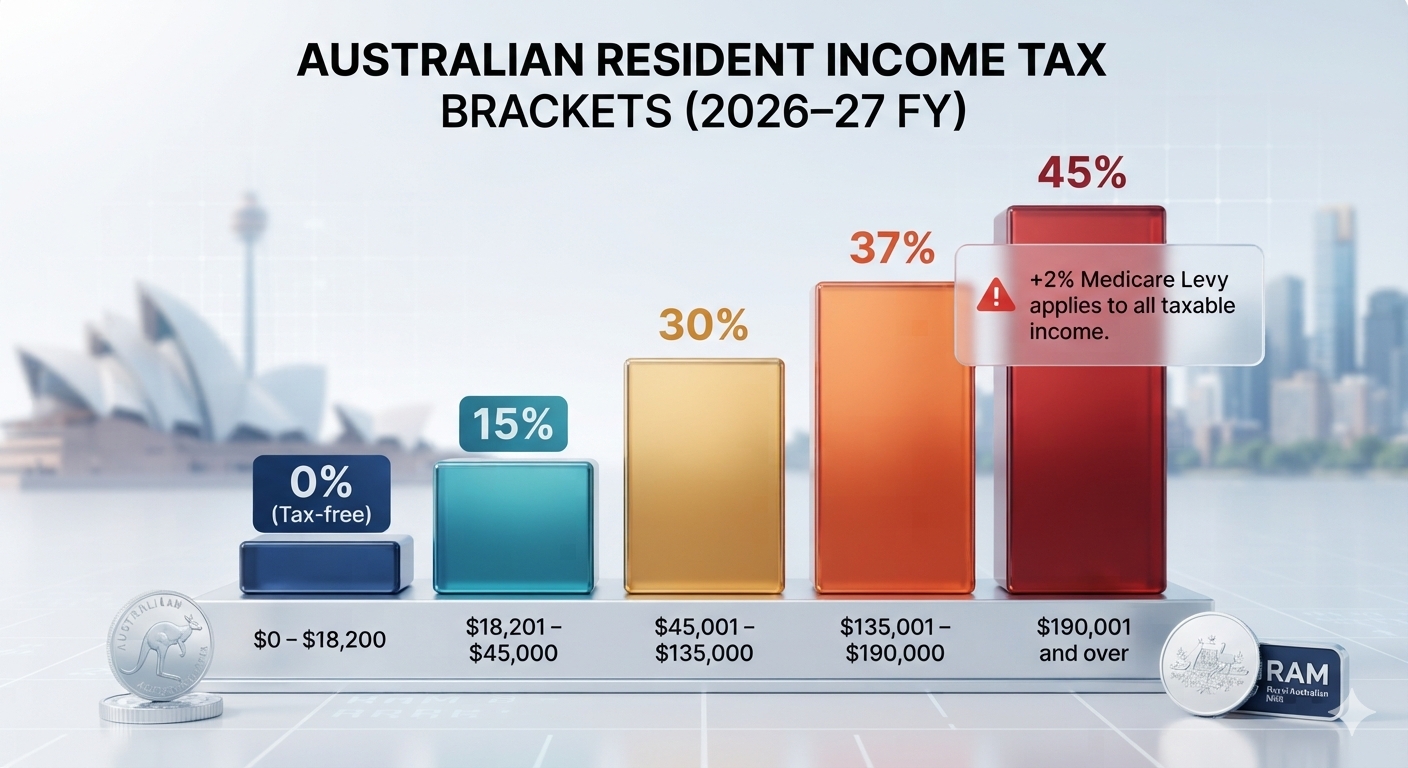
These are the resident income tax rates your capital gain is taxed at once it is added to your income.
| Taxable income | Marginal rate |
|---|---|
| $0 – $18,200 | 0% |
| $18,201 – $45,000 | 15% |
| $45,001 – $135,000 | 30% |
| $135,001 – $190,000 | 37% |
| $190,001 and over | 45% |
Plus the 2% Medicare levy. Rates shown are for Australian residents for 2026-27 and can change. Check the ATO website for the latest figures.
How the Capital Gains Tax Rate Is Applied
- Work out your capital gain. Sale price minus your cost base. Use our capital gains tax calculator Australia guide if you need the steps.
- Apply the 50% discount. If you held the property for more than 12 months, only half the gain is counted.
- Add it to your income. The discounted gain stacks on top of your salary and other income for the year.
- Tax is worked out on the total. The extra tax is the difference between the tax on your income with and without the gain.
Worked Example: CGT at Different Income Levels
An investor sells a property with a gross gain of $240,000. After the 50% discount, $120,000 is added to income. The extra tax depends on the other income they earn that year.
| Other income | Total taxable income | Approx. extra tax on the gain |
|---|---|---|
| $60,000 | $180,000 | $41,550 |
| $90,000 | $210,000 | $45,250 |
| $120,000 | $240,000 | $49,750 |
These figures include the 2% Medicare levy. In every case the investor pays tax on only $120,000, not the full $240,000 gain.
Illustrative only. Based on 2026-27 resident rates, no other deductions, offsets or levies. Speak to a registered tax agent about your situation.
Capital Gains Tax Rate by Owner Type
| Who owns it | Rate on the gain | Discount |
|---|---|---|
| Individual (resident) | Marginal rate (0–45%) + Medicare | 50% after 12 months |
| Company | 25% or 30% flat | None |
| Super fund | 15% (accumulation phase) | 33.33% (about 10% effective) |
| Trust | Taxed in the hands of the beneficiaries | 50% if passed to individuals |
| Foreign resident | Different rates apply | Generally none |
3 Ways to Reduce Your Capital Gains Tax Rate
- Time the sale. Selling in a year when your other income is lower, or after you retire, can keep the gain in a lower bracket.
- Check your exemptions. The main residence exemption and the 6 year rule capital gains tax exemption can remove part or all of the gain.
- Use capital losses. Losses on shares or other assets can be offset against the gain before the discount applies.
Holding costs matter too. If the property is negatively geared, read how to calculate negative gearing so you understand the full tax picture before you sell.
Selling or Buying an Investment Property?
Get your finance sorted before you sign the contract. We compare lenders across Melbourne.
Try Our Free Calculators Book a Free ChatCapital Gains Tax Rate Australia FAQs
What is the capital gains tax rate in Australia?
Is capital gains tax 50% in Australia?
What is the capital gains tax rate for a company?
Do I pay capital gains tax when I sell my home?
Can I pay less capital gains tax by selling in a lower income year?
This article is general information only and is not tax or financial advice. Speak to a registered tax agent or accountant about your situation.