

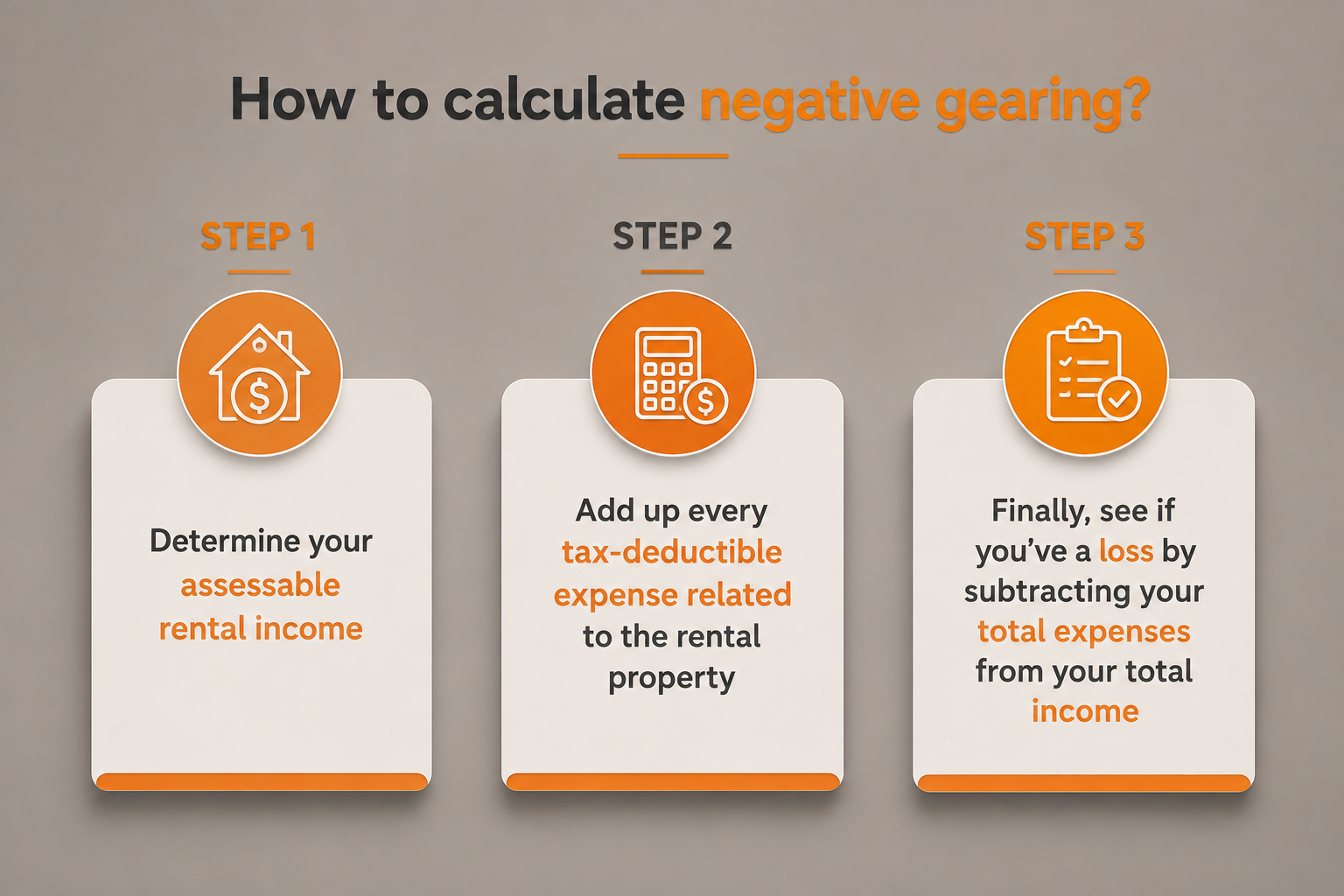
How to Calculate Negative Gearing on Your Investment Property
calculate negative gearing comes down to comparing your rental income against your deductible expenses — then working out how that loss affects your tax. Here's exactly how the calculation works, a worked example, and a free calculator to run your own numbers.
Important: This article is general information only and does not constitute financial or tax advice. Your actual tax outcome depends on your individual circumstances and current ATO rules. Please seek independent financial and tax advice before making decisions.
The Negative Gearing Formula
At its core, negative gearing calculation follows a simple formula:
Formula
Rental Income − Deductible Expenses = Rental Loss (or Profit)
If your deductible expenses are higher than your rental income, you have a negatively geared property — a rental loss that may be deductible against your other taxable income, depending on your circumstances.
What Counts as a Deductible Expense?
- Loan interest
- Property management fees
- Council rates and water charges
- Insurance (landlord, building)
- Repairs and maintenance
- Depreciation on eligible items
- Body corporate fees (if applicable)
Worked Example
| Item | Annual Amount |
|---|---|
| Rental income | $28,000 |
| Loan interest | $24,000 |
| Property management | $2,500 |
| Council rates & insurance | $3,000 |
| Repairs & maintenance | $2,500 |
| Total expenses | $32,000 |
| Rental loss | $4,000 |
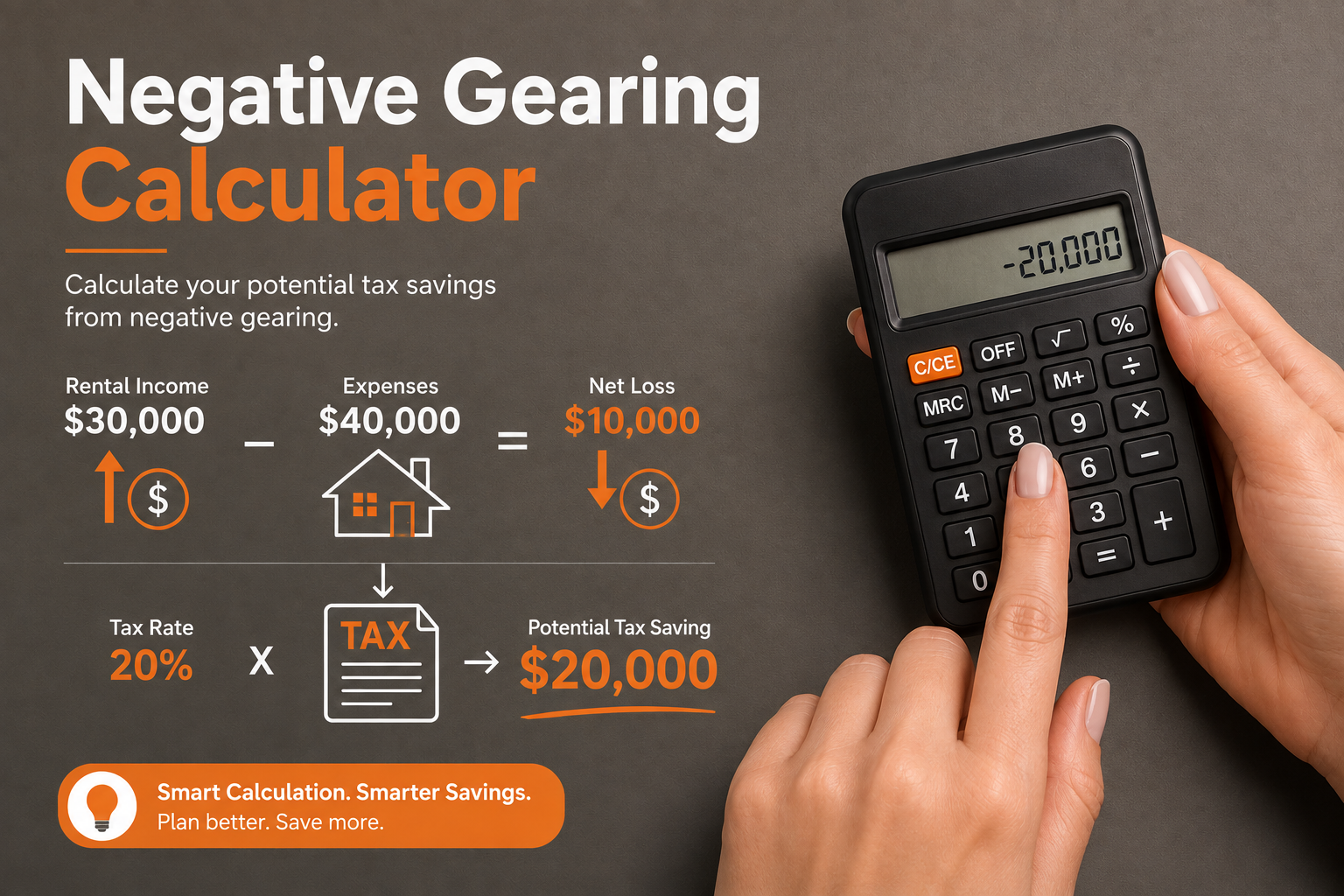
Key takeaway: This investor has a $4,000 rental loss. Depending on their tax bracket, this loss may reduce their taxable income — but the tax saving is only part of the picture, not free money.
How the Tax Benefit Is Calculated
Once you know your rental loss, the potential tax benefit depends on your marginal tax rate. A $4,000 loss doesn't mean a $4,000 refund — it means $4,000 less taxable income, which translates into a tax saving equal to $4,000 multiplied by your marginal tax rate.
Important: A higher marginal tax rate means a larger dollar-for-dollar tax saving from the same rental loss — this is exactly why negative gearing tends to benefit higher-income earners more, as covered in our main negative gearing article.
Steps to Calculate Your Own Negative Gearing Position
- Add up your annual rental income — total rent received over the year.
- Add up your deductible expenses — interest, management fees, rates, insurance, repairs, and depreciation.
- Subtract expenses from income — a negative result means you're negatively geared.
- Apply your marginal tax rate — to estimate the potential tax saving from the loss.
- Factor in the full picture — cash flow, financing costs, and potential capital growth, not just the tax outcome.
🧮 Try Our Negative Gearing Calculator
Skip the manual maths — plug in your numbers and see your estimated position instantly.
Use the Calculator →How Be Smart Finance Can Help
Running the numbers is only step one — understanding what they mean for your borrowing and cash flow is where a broker adds real value. We can help you:
- Work through your specific rental income and expense figures
- Understand how a negatively geared property affects your borrowing capacity
- Structure your loan to support your investment strategy
Frequently Asked Questions
What expenses can I include when calculating negative gearing?
Loan interest, property management fees, council rates, insurance, repairs, maintenance, and depreciation on eligible items are commonly deductible — always confirm current rules with a tax professional.
Does a bigger rental loss mean a bigger tax refund?
Not directly. The tax benefit depends on your marginal tax rate applied to the loss — not the loss amount alone.
Can I calculate negative gearing myself?
Yes, using the formula (rental income minus deductible expenses), though a calculator or professional advice can help ensure accuracy for your specific situation.
Want Help Understanding Your Numbers?
Book a free chat with Be Smart Finance to talk through your investment property finance.
Book a Free Chat