



Business Loan Guarantor Requirements in Australia: 2026 Guide
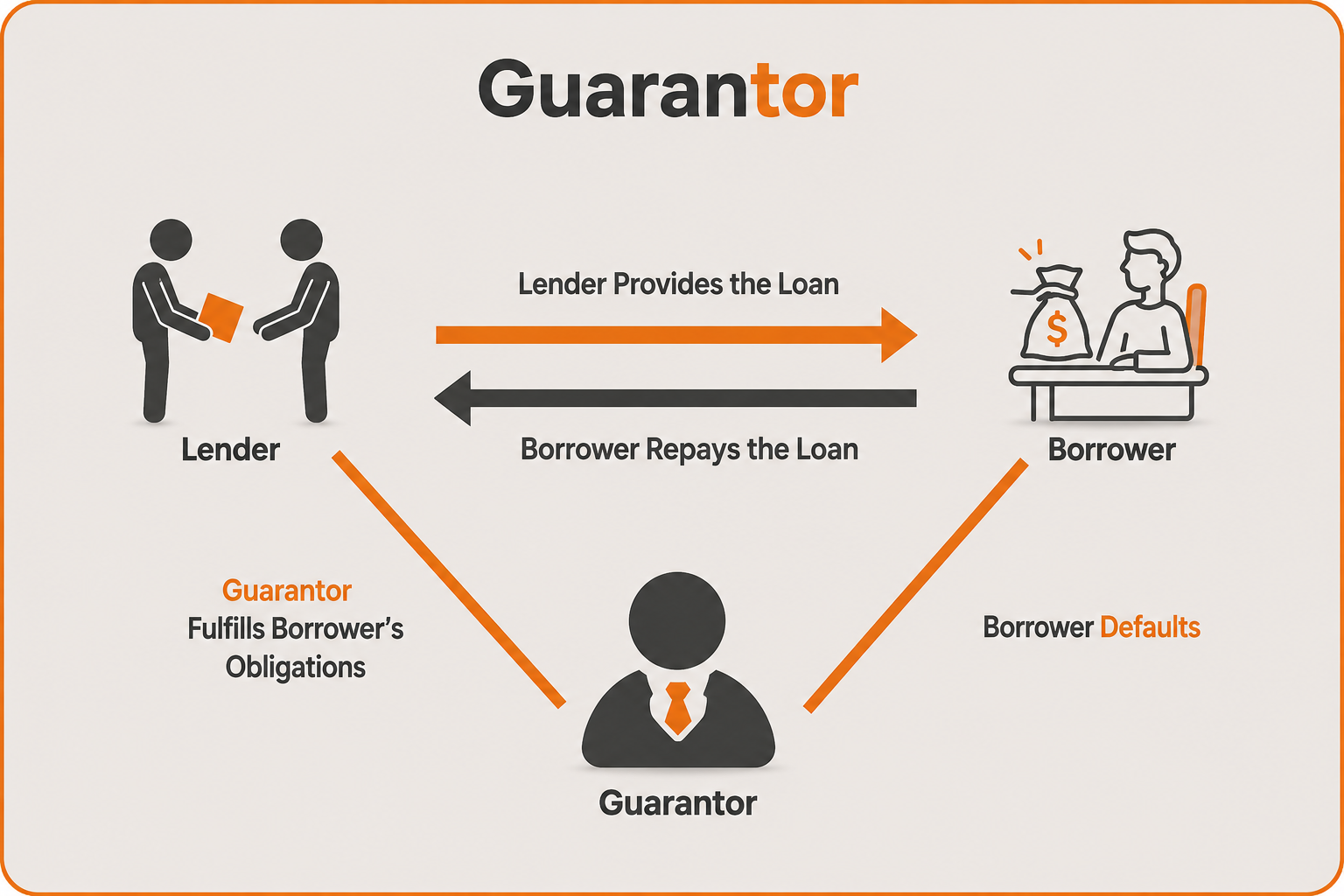
A business loan guarantor is a person who agrees to repay a business loan if the business cannot. In Australia, most commercial lenders require directors to act as a business loan guarantor, meaning personal assets — including the family home — can be used to recover the debt if the business defaults. Here's exactly what a business loan guarantor agrees to, who lenders accept, and what to check before anyone signs.
What Is a Business Loan Guarantee?
A business loan guarantor signs a promise to the lender, not to the business. If the business stops paying, the lender can pursue the business loan guarantor directly — and in most cases doesn't have to exhaust every option against the business first.
Most Australian business guarantees are:
- Unlimited — covering the whole debt, not a fixed portion
- Joint and several — where there are two or more guarantors, the lender can pursue any one of them for the full amount
- Ongoing — continuing to cover new facilities and increases unless formally released
Who Can Be a Business Loan Guarantor?
Not everyone qualifies as a business loan guarantor. Lenders assess each proposed guarantor on assets, income and credit history.
| Who | How lenders treat them |
|---|---|
| Company directors | Almost always required |
| Shareholders with a substantial stake | Commonly required |
| Spouses and family members | Accepted where assets or income support it |
| Related or parent companies | Assessed as a separate entity |
Lenders generally look for a business loan guarantor who has assets they could realistically pursue, stable income, a clean credit file and no undisclosed guarantees elsewhere.
What You'll Be Asked to Provide
Before accepting you as a business loan guarantor, the lender will ask for documentation that shows you could actually meet the obligation.
- Identification and proof of address
- Personal assets and liabilities statement
- Income evidence — payslips, tax returns or business financials
- Details of existing debts and any other guarantees
- Property details, where property is offered as security
Guarantee vs Security — They're Not the Same
A guarantee is a promise to repay. A security interest is a legal claim over a specific asset, such as a mortgage over property.
Many guarantors sign both. That combination matters: a guarantee alone means the lender must pursue you and enforce a judgment. A guarantee supported by a mortgage over your home means the lender already holds a direct claim over that property.
What to Check Before You Sign
Is the guarantee capped? Some lenders will negotiate a limit. Ask.
Does it cover future borrowing? If yes, ask whether it can be limited to the current facility.
How do I get released? Guarantees don't end when the loan is repaid unless you formally request a release in writing.
What happens if I leave the business? Resigning as a director does not cancel an existing business loan guarantor obligation.
Have I had independent advice? Lenders often require a business loan guarantor who isn't a director to get independent legal advice — and that requirement exists for good reason.

Business Loan Guarantor Protections Under the Banking Code
Lenders who subscribe to the Banking Code of Practice have specific obligations towards guarantors, including providing certain documents before a guarantee is signed and allowing time to consider it. ASIC's MoneySmart site explains what going guarantor involves in plain language.
Not every commercial lender subscribes to the Code, so it's worth checking who you're dealing with.
📖 Want the bigger picture on commercial finance? See our complete Commercial Real Estate Financing guide.
Can You Get a Business Loan Without a Guarantor?
Sometimes, but it's uncommon for small and medium businesses. Where a lender proceeds without a business loan guarantor, it usually involves a business with a long trading history and strong financials, substantial security over business assets, or a lender that prices for the additional risk.
More often the practical outcome isn't removing the guarantee but negotiating its scope — capping the amount, limiting it to one facility, or reducing which assets are exposed. That's usually a conversation worth having before the application goes in, not after.
Talk It Through Before You Sign
If you're weighing up a business loan and the guarantee attached to it, we can walk you through what different lenders will ask for and where there's room to negotiate.
Call 0408 659 819This article is general information only and does not take your circumstances into account. Consider getting independent legal advice before signing a guarantee.
Frequently Asked Questions
Does being a business loan guarantor affect my ability to borrow?
Yes. Lenders treat guarantees as a contingent liability and will factor them into your borrowing capacity for other loans.
Can I be removed as a business loan guarantor?
Only if the lender agrees to release you in writing. That usually requires the business to refinance or provide a replacement guarantor.
What happens if the business defaults?
The lender can demand payment from you and, if you've provided property as security, take steps to recover the debt against that property.
Do both spouses need to sign?
Where jointly owned property is used as security, generally yes.
Does every director need to be a business loan guarantor?
For most small and medium business lending in Australia, yes.